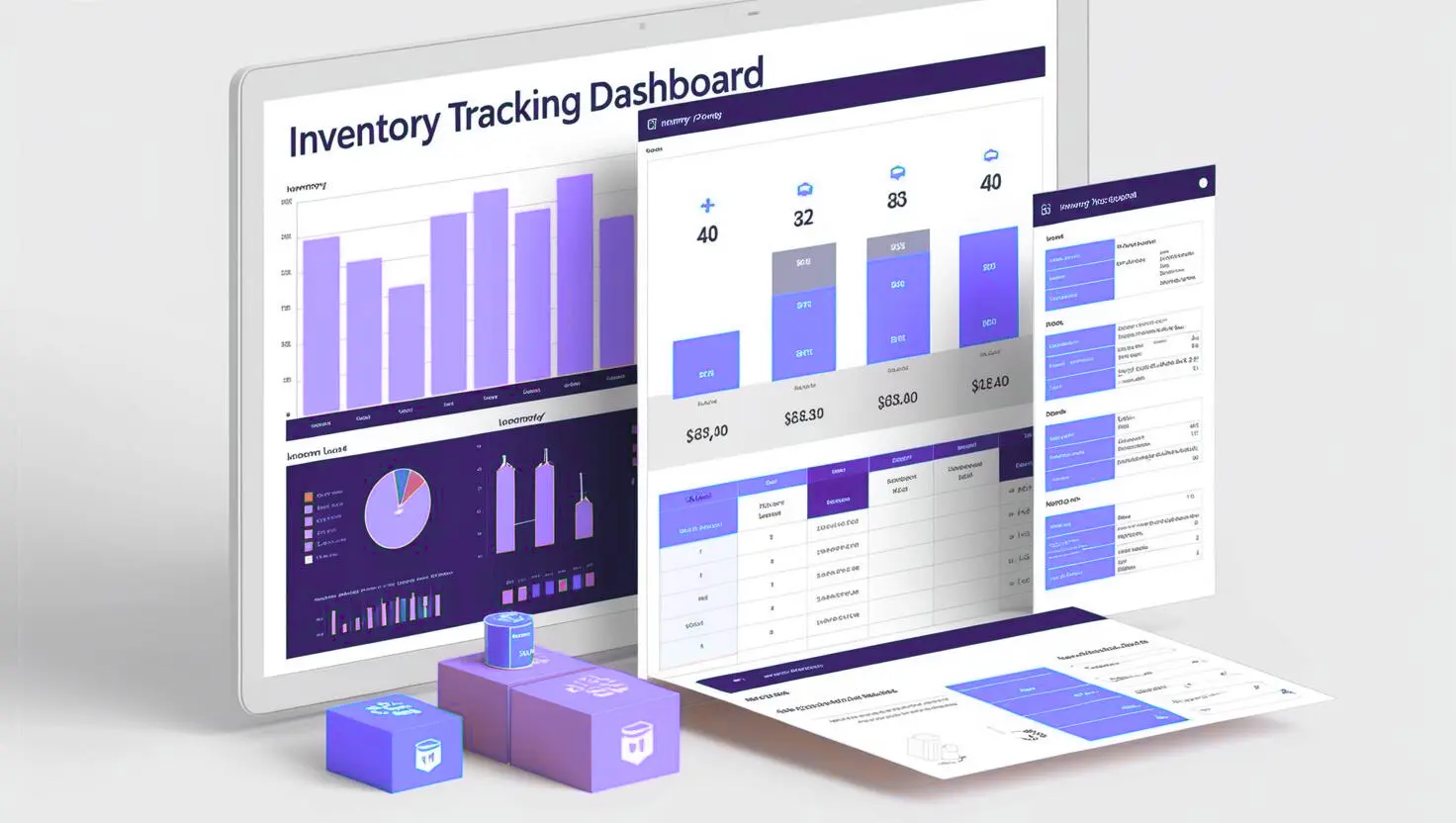
If you're still tracking stock across a handful of spreadsheets, you already know the problem isn't the software — it's the lag. Someone forgets to update a cell, a sale happens in-store while the sheet still shows yesterday's count, and by the time anyone notices, you've either oversold an item or over-ordered one you didn't need. Odidor's Inventory Management System (IMS) was built to close that gap entirely, giving retailers, wholesalers, and warehouse operators one connected system instead of a patchwork of files.
Stock That Updates Itself
At the core of IMS is real-time tracking: every sale, receipt, and transfer updates stock counts the moment it happens, per SKU and per location. There's no overnight batch sync or end-of-day reconciliation to wait on. That immediacy directly prevents the two costliest inventory mistakes — selling something you don't actually have, and reordering something you already have too much of.
Built for Real Catalogs, Not Just Single SKUs
Most product catalogs aren't flat lists — they're full of variants: size, color, material, finish. IMS treats each variant as its own trackable item under a shared parent product, so stock and sales can be broken out by variant without duplicating data. Categories, tags, and attributes keep things searchable as the catalog grows, rather than turning into an endless scroll.
Orders That Move Themselves Through the Workflow
Every order progresses through a defined path — placed, confirmed, fulfilled, shipped — with inventory adjusting automatically at each step. That means stock levels and order status never drift apart, staff work from a single queue instead of cross-checking a separate sheet, and customers get status updates that reflect what's actually true, not what someone remembered to update.
One Dashboard, Every Location
Whether a business runs a single storefront or a dozen warehouses, IMS provides one dashboard showing stock everywhere at once. Transfers between locations are logged as their own transactions, so it's always clear what's in transit versus what's actually on the shelf — the exact visibility needed to stop one location from running out while another sits overstocked.
Access Control That Doesn't Rely on Trust
Not everyone on a team needs to see cost pricing or be able to edit supplier terms. Role-based access control lets admins define exactly what warehouse staff, sales staff, and managers can each view and do, enforced at the system level rather than by hoping no one clicks the wrong button. It also leaves a clean audit trail of who changed what.
Suppliers and Purchase Orders, In One Place
Purchase orders are generated and tracked directly against supplier records, so procurement history, lead times, and pricing terms live right alongside the inventory they affect. When stock runs low, a PO can be raised without leaving the platform or re-typing supplier details from a separate contact list — and over time, that history becomes useful leverage for negotiating better terms or spotting a supplier that consistently ships late.
Reports That Look Forward, Not Just Backward
IMS doesn't stop at raw counts. It analyzes sales velocity and seasonal patterns to flag what should be reordered and when, and surfaces slow-moving stock that's tying up cash alongside fast movers at risk of running out. That turns inventory data a business is already collecting into an actual planning tool, rather than a snapshot of today's numbers.
Faster Counts With Barcode and QR Scanning
Receiving, picking, and cycle counts happen faster and with fewer errors when staff scan instead of typing a SKU by hand. Every scan writes directly to the same real-time stock record used across the system, so there's no separate reconciliation step between the warehouse floor and the dashboard.
How It All Fits Together
The workflow behind IMS is straightforward:
- 1.Add Products — import a catalog or add products manually, including variants.
- 2.Track Stock in Real Time — every sale, receipt, and transfer updates counts instantly, everywhere.
- 3.Process Orders — orders move through the workflow with inventory adjusting automatically.
- 4.Manage Suppliers — raise purchase orders and track lead times without leaving the platform.
- 5.Review AI Insights — get reorder recommendations and demand forecasts based on real sales trends.
It Plugs Into What You Already Use
IMS isn't meant to replace a business's existing tech stack — it's meant to sit inside it. It connects with POS systems so in-store sales update stock instantly, syncs with accounting software to avoid double-entry, keeps e-commerce storefronts from overselling items that already sold out elsewhere, and hands order details straight to shipping and fulfillment tools once an order is confirmed. Connecting a tool takes a guided, no-code setup wizard rather than a development project, and Odidor's onboarding team is there to make sure it's connected correctly.
The Bottom Line
Spreadsheets work — until the business outgrows them. Odidor IMS replaces manual, error-prone tracking with a system where accuracy is automatic, reordering takes seconds instead of digging through sheets, every team member gets the visibility their role needs, and multiple locations are managed from one screen instead of reconciled by hand.
Want to see it in action? Request a demo or explore the full IMS documentation.